How I Manage My Migraines
About 18 months ago, I was diagnosed with Migraines. Since then, I’ve learned a lot about how to manage mine, and while everyone is different, I thought it might help to share some of the things I’ve figured out since then in hopes it might help some of you as well.
The rest of 2024 was spent, more or less, trying to figure out how to settle down the migraines and keep them under control, because there isn’t a “cure” for migraines, but a series of possible treatments that you try until you find one that works. Those treatments, of course, involve different and more powerful drugs (with different and worse side effects, of course). I plan on going into the migraines in more detail soon, so stay tuned.
But by fall of 2024, I had things under pretty good control and life was pretty normal (finally) — until December, when it all fell apart again. Why? Well, lets get into that.
Step 1: Supplements
When I was diagnosed, my Neurologist gave me a list of a few supplements he suggested I take:
Riboflavin at 400mg once a day
Coenzyme q10 (CoQ10) at 300mg once a day
Melatonin 3mg once a day
Zinc Sulfate 220mg once a day
Vitamin D 4000 IU once a day
Also, to my amusement, his notes state: There is no evidence that doses higher or lower than these have any proven benefit. In other words, don’t megadose things, folks.
Have they helped? I don’t know. I didn’t spend any time with them before adding in the other treatments that I can’t tell you if, and how much, they might have helped. That said, it seems stupid to not take them and the chances of negative side effects is effectively zero, so why not? And so, I do, every morning (except the Melatonin, which is taken just before bed).
Step 2: Drugs
When I was diagnosed, we reviewed the possible drug treatments. Migraines are one of those things that’s very variable from person to person, and to some degree, you need to keep trying things until you find the ones that work. He described about five tiers of drugs, each one stronger acting but also including more interesting and unfortunate possible side effects. The first tier are called triptans; in my case we started with Sumatriptan, and fortunately, I responded pretty well to them.
My prescription has me taking a small dose when symptoms kick in, and if that doesn’t end them, after a period of time taking a second, stronger dose. When I was first starting out, I was taking that first dose every couple of days and that second dose about once a week. To date, I’ve found Sumatriptan to be the only drug I need to control things.
Step 3: Stimulators
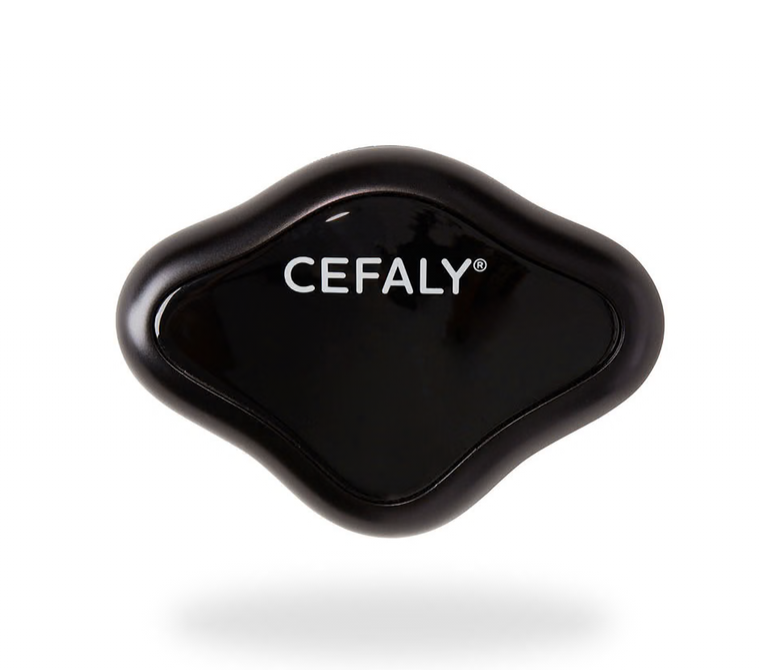
One optional recommendation they made was to look at one of the over the counter migraine devices that are available. These attach to your forehead and stimulate a nerve that’s involved in the migraines happening, overstimulating it so it shuts down. After research, I decided to give the device from Cefaly a try.
The good news is these devices do not require a prescription. The bad news is they are not covered by insurance, so the cost is completely out of pocket. At the time I write this, the device costs about $500 — it was around $350 when I bought mind pre-tariff. It uses an adhesive pad to attach to forehead, and these, while they can be used multiple times, are disposable and run about $25 for a pack of three, which I find lasts me longer than a month, so the ongoing cost to use is somewhere between $15-$20. It has a 90 day return policy, so you can try it and if it doesn’t work, you can send it back for a refund.
Note: it should not be used if you have a pacemaker or similar device. Otherwise, there are no significant restrictions or worries about side effects.
Does it work? I put one on for the first time after using the Sumatriptan for a week or so, and after my first treatment, things felt — normal. For the first time in a long time, even with the Sumatriptan. Early on I used it fairly heavily, since there are no restrictions on usage. Cefaly recommends a 20 minute treatment as maintenance on a daily basis, and a 1 hour treatment when your having symptoms.
I’ve found these devices are not well known among migraine sufferers. When I spent a few days in hospital last year for my Rapid Unplanned Vacation, for instance, I was given permission to use it, and ended up in conversation with three different nurses and a doctor, all of whom had migraines and none of them knowing that devices like this exist — and I think all of them were going to try them out. Cefaly claims that 80% of migraine sufferers get improvement using the device, and I know that in my case, the change was a profound improvement to my quality of life. I use the Cefaly daily, and in fact I bought an emergency spare I have in a drawer in case something happens to this one. That’s how important I feel it is to my well-being.
Step 4: Triggers
And this leads me to last December 2024, when overall, I had the migraines under good control. I was taking Sumatriptan 6- 7 times a month and never needing that second dose, and I felt pretty good about everything. And then just before Christmas, it all fell apart badly, and I was taking the Sumatriptan about every other day, and I needed the second dose three times. Ugh.
What happened? In thinking through what might be different from the previous months I realized there was one obvious thing: Christmas chocolate.
And doing research into this, I started learning about food triggers. Actually, I’d read up about triggers early on and made a few tweaks but I didn’t pay much attention to them until now. My Neurologist recommended the book Heal Your Headache as a primer on migraines and I agree with some caveats. It was published in 2002 by a leading neurologist who was an expert in treating migraines. Unfortunately, research continued and there are aspects of his advice that could use updates in a new edition: for instance, he has a list of foods that he sees as triggers to migraines, and his solution is an elimination diet that removes them. That’s kind of extreme, and the latest research has shown that elimination diets are now generally seen as not effective.
But, I think the idea of trying to identify which foods are triggering your migraines is quite imporant, so you can reduce or eliminate those from your diet. The book will give you a good list of items to consider.
In my case, in thinking about why December was different than the previous few months of general stability, there was an obvious candidate: we got a nice supply of Christmas cookies and candy, because, well, Christmas, and so where my general eating or drinking of chocolate was infrequent in small quantities, I was eating it daily and in moderate amounts.
As soon as I realized that, I stopped. And within the next day and a half, I felt better and things to back to a more stable normal.
And because I’m a nerd, I decided to give this a test, and for a few days, I started eating some chocolate, and sure enough, I started feeling like crap again. I stopped the chocolate and over the next day and a half, I went back to normal. For me, that was case closed.
I also, now that I was looking for them, found two other triggers. Caffeine (of course!) and Aspartame,
In researching triggers, I found studies that indicate that about 60% of migraine sufferers reported that chocolate triggered symptoms. For Caffeine, it’s about 35%.
And so, the last year has been a year without either Chocolate or Caffeine.
The TL/DR
So, let’s sum this all up. As long watch what I eat and drink, the migraines (and therefore the vertigo) are at worst a mild annoyance, where I’m taking minimal medication for the migraine,
It has a downside. I miss Chocolate a little, but am a serious tea drinker and losing both black and green tea from my daily life has been an interesting adaptation. This is something I’m writing about in the January 6FPS Newsletter titled My Year Without Chocolate, due in your inbox soon (if you haven’t subscribed, you should).
I currently take Sumatriptan 4-5 times a month, but the time between doses varies from 2-3 days to 10. I define my migraine journey in terms of Bad days and Off days, where Bad days happen when the migraines cause me to change or curtail activity even with treatments, and Off days are when the symptoms are there in some way, even with treatment, but I can carry on and do what I planned on. From my chats with other migraine suffers, I think I have no reason to complain about this, and I don’t.
If you think you suffer from migraines, I recommend talking to your doctor about talking to a neurologist — this is not something I suggest self-diagnosis is a good idea. If you are someone diagnosed with Migraines, if you haven’t read Heal Your Headache, I recommend it; you will probably learn a few nice tips for making things better. Also consider trying out the Cefaly device and see if it helps.
And don’t do what I didn’t start doing until last December: think about triggers. Look for patterns in things you do and eat in the day or two before attacks, and see if you can identify possible triggers. The Cefaly device made a big improvement in my quality of life, but so did identifying that trigger chocolate was setting off.
And talk to your neurologist: research and technology continues to advance. There seem to be some newer migraine drugs with fewer side effects in the market (one that caught my eye recently was Nurtec) and perhaps you can find options that didn’t exist a year or so ago.
Dealing with migraines is a process — you don’t heal them, you have to manage them. In my case, fortunately, they’ve proven overall to be fairly easy to control most of the time — although when I was still trying to get them under control didn’t consider them minor at all. Keep exploring options, and keep an eye out for patterns that could lead you to identify one of those food triggers.
And good luck!