Apple at 50 (and me)
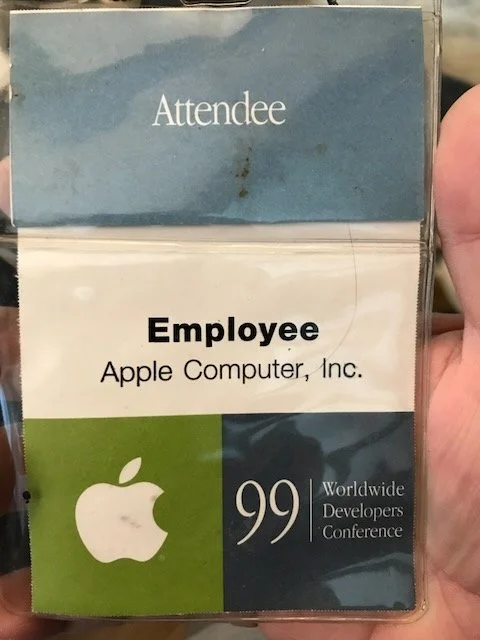
I go back a long way with Apple, both as a user and for a significant part of my life an employee. I’ve pondered talking about that time on and off for years but never committed to it, but with Apple’s 50’th birthday coming up, I figured it was a good time to start writing down my thoughts on Apple and this part of my life.
I don’t have any structured outline of what I’m going to write about; this is more about what is interesting to me and what kind of questions I from all of your — please suggest topics!
Apple was officially founded April 1, 1976, about two months before I graduated from high school. I had no knowledge of computers, much less interest in them, and when I went to college I started out as, of all things, a theater major looking at either Radio/TV or back stage tech. My introduction came by complete accident: I needed to take a math class, and in attempting to avoid it, I took a class that qualified — and it turned out to be an introduction to Basic programming.
I almost immediately hit that “where have you been all my life” moment, and I aced the class. So much, in fact, that the professor called me into his office because he didn’t believe someone in that class could turn out the program I turned in as my final project (it wasn’t too bad, it was a tic-tac-toe player). So I got to spend 30 minutes or so explaining everything in the code, until he said he was convinced I had actually written it. Needless I got an A out of the class and never looked back.
Soon after I changed my major to a Computer Science/English double major, which had both disciplines wondering why I bothered with the other and suggesting I focus. In reality, that has served me quite well through the years.
My first home computer was an Imsai 8080 with a massive 8K of RAM. Later on we got an Apple ][e, which was my first introduction to the Apple universe. Along the way I discovered the Internet (then known as ARPAnet) and finagled my way into my first email address, which was chuqui@mit-mc.arpa, and started hacking away at the school computers I had access to, which were a RSTS/E (basic) system and a CDC Cyber NOS system (primarily fortran and pascal).
Through the MIT system I discovered the bigger internet, including mailing lists and USENET, and by the early 1980’s they were a fixture in my life.
I never actually finished by C.S. degree; I got an opportunity to join the real world with a couple of semesters of work left to do, and I jumped at it, programming Basic for a Private Detective who did repo work (cars and credit cards). That was never boring. Then in 1982 I made a big jump and moved from Southern California to the Bay Area and joined a startup that wrote software for the insurance industry. Later on I moved to another startup, this one on Bubb Road in Cupertino (it’s now an Apple building, of course) as a system administrator.
In 1986 I joined Sun Microsystems as in Tech Support (employee 1200ish), and ended up specializing in System Administration and of all things, Sendmail hacking. The first Macintosh came out in 1984, but I didn’t buy one until the 512Ke came out. When Hypercard came out in 1987 I wrote a lot of fun stuff in it and got involved in the Hypercard groups online, so I was slowly falling deeper into the Apple universe, and loving it.
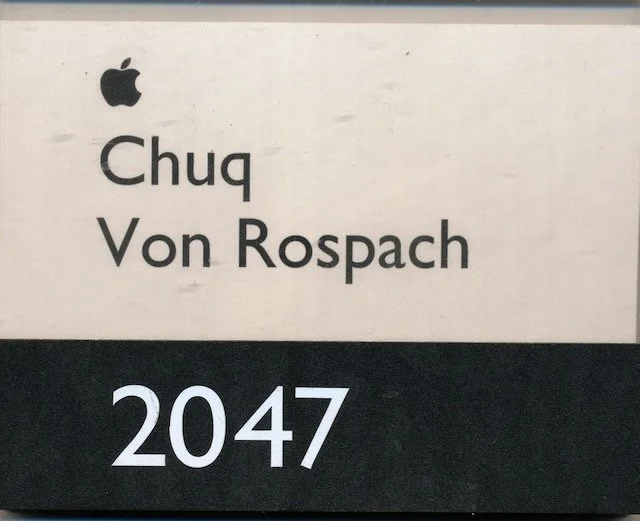
In 1989 an opportunity came up: my boss took a position to found a support team inside Apple for their Unix system, A/UX, and asked if I wanted to join Jim. I jumped at it. This group was called the Direct Response Center and it was five people, and the first paid tech support for any Apple product. I spent the next 17 years of my life trying to help Apple make a difference.
That wasn’t always easy. When I joined, Steve had been kicked out and John Sculley was in charge. Four years later, Sculley was out and replaced by Mike Spindler, who was an absolute disaster. That was followed by Gil Amelio, who was ousted by the return of Steve Jobs, who orchestrated an amazing comeback that built Apple into the behemoth it is today.
Some thoughts on Apple’s CEOs over the years:
Steve Jobs deserved to be fired; yes, he brought the Mac to life and out into world was a great feat, but as the CEO he was a disaster. His insistence on the Mac being an appliance hurt it in the market, and Apple was not on a track to success. He needed to be removed from Apple before the company could be put on a more successful path.
Sculley was the person who approved the shift to the “open Mac” products and the marketing that really helped the Mac move out from the toy computer market into the larger and more successful market segments. Where Sculley went wrong was getting too tech focussed (Newton was a fascinating idea, ten years too early) and he pushed the company too far too fast, and Apple suffered as a result. Should he have been fired? I have mixed feelings. He did a lot of things right, and Apple benefitted from that. He also lost is focus, and Apple struggled because of it. That said, I think Apple would have been massively better off under Sculley than the guy they replaced him with. In retrospect, I think Apple would have been better off staying with Sculley and with the board working with him to refocus on Apple’s strengths — but the stock market demanded a sacrifice.
And what we got next was Mike “The Diesel” Spindler. Spindler was, from what I’ve heard from anyone who had to work with him, a pretty nasty man. When he took over from Sculley, Apple was troubled, but he successfully guided the company into near bankruptcy. His only strategies seemed tied around cost reduction, which of course reduced product quality and software reliability.
The big question here, I think, is why the board went with Spindler instead of Jean-Louis Gassee, who many considered the obvious choice at the time. I’m not convinced Gassee was the right choice, but he definitely would have been a better choice. If it were up to me, I’d have stayed with Sculley here, but Gassee would have been my choice. If nothing else, he understood the engineers and was generally well regarded in the technology parts of the company.
From my view within the company, Spindler’s only real goal was to sell the company. He came close twice, once to Sony and once to Sun Microsystems. Both deals fell through. According to multiple people I knew at the time, a big reason both deals fell through was Spindler insisting on a seat on the board as part of the sale.
A sale to Sony would have likely killed Apple, in a slow death into irrelevance (think about what happened to Palm after it was bought by HP, and where WebOS is today). Sun would have been an interesting partner, and merging the two engineering teams and philosophies could have been really interesting. Neither happened. Instead we got crappy Performas and buggy software releases and the reputation Apple had for premium products wasted away, with good reason. Spindler had a real hate for Microsoft and thought the only way to beat them was to go after them where Microsoft was strongest — and that idea failed badly. He tried chasing the Enterprise market, including strategic deals with IBM, which is how Apple woke up one morning to find out it was now an AIX shop, and A/UX was buried and killed. That didn’t really work, either.
So, there’s very little good to say about the Spindler era, except that it only lasted three years. At which point Apple threw Spindler to the curb, and looked for someone who could sort out the mess and get Apple moving forward again.
They chose Gil Amelio. He took over from Spindler in 1996 and lasted 18 months before being ousted from Apple by the return of Steve Jobs. I think the general sentiment on Amelio is negative, and his tenure at Apple was flawed, but he did some very good things for Apple during that time. The big one: buying NeXT and bringing Steve back into the fold, but in some ways even more importantly, he sorted out and stabilized the company financials, which where an absolute disaster.
In some ways Amelio was the MASH surgeon who kept the patient alive long enough to get them to a place they could be put back together. His big weakness was that he was a finance guy who talked finance well, but couldn’t connect to the technical side of the company — his all hands talks were sometimes painful to watch, although at least he tried, unlike Spindler (who seemed to hate the tech people he depended on for the company to function). Amelio was a cultural mismatch for the company, but to me, he was a necessary step to get us from the Spindler Death Spiral years to a point where someone like Steve could step in and get the company moving forward again.
And then there was Steve. Amelio and his execs took a long, hard look at Jean-Louis Gassee’s Be and ultimately decided to engage with Steve and NeXT. That purchase went through, Steve returned to Apple, and the stage was set.
And as it turns out, at the time this happened I had an office in Valley Green 6, and next door we started seeing a Mercedez Benz without license plates start parking in the handicapped spot on a regular basis. We all knew that was Steve, of course. What we didn’t know was that in that building he was working with the folks on what would become that iconic iMac. It was also where the plan to replace Amelio was formed.
And one day we woke up and Amelio was gone, and Steve was back in charge, and we weren’t sure where this was going, but we knew everything was going to change.
And Steve and his second time at Apple is a very complicated and nuanced thing, so I think I’ll leave this here and start with Steve next.